Macrium Reflect X Server Free Download – Complete Backup and Recovery Guide
Introduction
Protecting business data is one of the most important responsibilities of server administrators. A server may contain operating systems, business applications, databases, shared documents, and other critical information. Unexpected hardware failures, software problems, accidental deletion, or cyberattacks can interrupt operations and cause significant data loss.
A dependable backup and recovery solution helps organizations prepare for these situations. Macrium Reflect X Server is a server-focused backup and disk imaging application developed by Macrium Software. It is designed to protect business-critical Windows servers through image-based backups, file and folder protection, and system recovery capabilities.
The software provides tools for creating backup images, scheduling protection tasks, restoring individual files, and recovering complete server systems. These capabilities can help IT administrators build a more organized disaster recovery strategy.
If you are searching for Macrium Reflect X Server free download, this guide explains its features, benefits, system requirements, installation process, backup workflow, recovery options, and licensing considerations.
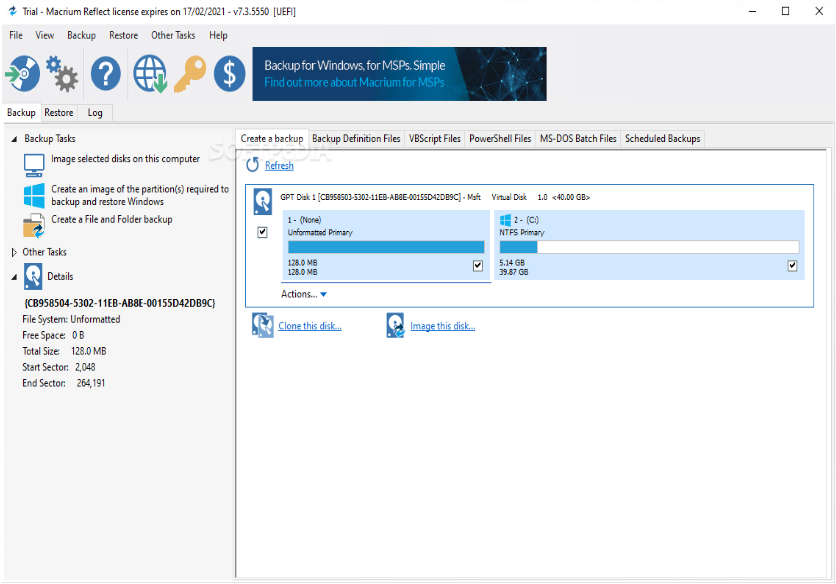
What Is Macrium Reflect X Server?
Macrium Reflect X Server is a Windows Server backup and recovery solution designed for business environments. It belongs to the Macrium Reflect X product family and focuses on protecting physical and virtual server systems.
The software uses disk imaging technology to create backup copies of selected disks, partitions, or complete systems. These images can be used to recover information after storage failure, operating system corruption, or other unexpected problems.
It also provides file and folder backup functionality, allowing administrators to protect selected information without necessarily imaging an entire disk.
Macrium Reflect X Server is intended for organizations that need reliable backup operations and recovery options for their server infrastructure.
Official product information is available on the Macrium Reflect Server website.
Key Features of Macrium Reflect X Server
1. Full System Image Backups
One of the main capabilities of Macrium Reflect X Server is image-based backup.
A system image captures the selected disk or partition structure so that it can be restored when necessary. This is useful for protecting operating systems, installed applications, system configurations, and important data stored on the selected volumes.
Administrators can use image backups to prepare for situations such as:
Server storage failure.
Operating system corruption.
Failed system updates.
Accidental changes to important files.
Hardware replacement.
Disaster recovery situations.
A complete and regularly updated backup can make server restoration more manageable.
2. Incremental and Differential Backups
Macrium Reflect X Server supports multiple backup methods, including full, incremental, and differential imaging.
Full backups capture the selected data as a complete backup image.
Incremental backups save changes made since the previous backup in the backup chain. This can reduce the amount of data processed during routine backup operations.
Differential backups capture changes since the last full backup.
These methods allow administrators to balance backup frequency, storage consumption, and recovery requirements.
The appropriate method depends on the organization's retention policy, available storage, and recovery objectives.
3. File and Folder Backup
Not every backup task requires an entire system image.
Macrium Reflect also provides file and folder backup capabilities, allowing users to select particular information for protection.
This can be useful for safeguarding:
Business documents.
Shared folders.
Configuration files.
Important project data.
Selected application-related files.
File-level backup can complement full system imaging by providing a more targeted approach to data protection.
4. Bare-Metal Recovery
Bare-metal recovery is important when a server becomes unusable because of hardware failure or severe system damage.
With a suitable backup image and recovery environment, administrators can restore a supported system without first reinstalling the entire operating system and rebuilding its configuration manually.
This can help organizations reduce recovery effort and return important server services to operation more efficiently.
Recovery success depends on backup integrity, hardware compatibility, drivers, and the selected recovery procedure.
5. Rapid Delta Restore
Rapid Delta Restore (RDR) is a Macrium technology designed to accelerate supported image restoration operations.
Instead of rewriting every block when conditions permit, it can identify differences between the source image and destination and restore the required changed data.
This can reduce restoration time in supported NTFS scenarios.
The actual performance depends on the storage device, image size, destination condition, and compatibility of the file system.
6. Rapid Delta Clone
Rapid Delta Clone (RDC) is designed to accelerate supported disk-cloning operations by copying file-system changes rather than performing a complete copy in every eligible situation.
It can be useful when replacing or upgrading storage devices.
RDC support has file-system limitations, so administrators should consult the official documentation before relying on it for a particular cloning task.
7. Automated Backup Scheduling
Regular backups are essential for protecting business information.
Macrium Reflect X Server provides scheduling capabilities that allow administrators to configure recurring backup operations.
A backup schedule can help reduce dependence on manual processes and make data protection more consistent.
Administrators should establish schedules according to how frequently server data changes and how much information the organization can afford to lose.
8. Backup Verification
Creating a backup is not enough. Administrators also need confidence that the backup image can be read and used during recovery.
Backup verification helps check the integrity of stored backup files.
Regular verification, combined with practical restoration tests, can help identify problems before an actual disaster occurs.
9. Rescue Media
Rescue media provides a recovery environment that can be used when the normal Windows installation cannot start.
Administrators can prepare suitable bootable recovery media in advance and use it when a server requires offline restoration.
Keeping rescue media available is an important part of a complete backup strategy.
10. Instant Virtual Boot
Macrium Reflect Server supports instant virtual booting of backup images through Microsoft Hyper-V.
This capability can help administrators start supported backup images as virtual machines for testing or recovery purposes.
It can be valuable when checking whether a backup is usable or when temporary access to a protected system is required.
Availability and configuration depend on the supported environment and product edition.
11. Macrium Image Guardian
Macrium Image Guardian is designed to protect supported Macrium backup files against unauthorized modification, deletion, or renaming by applications.
This adds another layer of protection for backup storage, particularly in environments where ransomware and other malicious software are concerns.
It should be considered one part of a broader security strategy rather than a complete replacement for offline backups, access controls, and other security measures.
Benefits of Using Macrium Reflect X Server
Macrium Reflect X Server offers several advantages for organizations that need to protect Windows Server environments.
Improved Data Protection
Image-based backups can help safeguard operating systems, applications, partitions, and important information.
Reduced Recovery Effort
Prepared backup images can make it easier to recover a supported server after a serious system problem.
Flexible Backup Methods
Full, incremental, and differential backup options allow administrators to organize backup routines according to their requirements.
Better Backup Management
Scheduling and verification tools can help establish more consistent backup procedures.
Support for Physical and Virtual Servers
The product is designed to protect supported physical and virtual Windows Server environments.
Disaster Recovery Preparation
Rescue media, system imaging, and restoration tools can help organizations prepare for unexpected failures.
Who Should Use Macrium Reflect X Server?
Macrium Reflect X Server is primarily intended for professional and business environments.
IT Administrators: Professionals responsible for maintaining Windows Server systems and protecting important information.
Small and Medium-Sized Businesses: Organizations that need structured backup and recovery processes for their servers.
Enterprise IT Teams: Teams managing business-critical infrastructure and recovery planning.
Server Maintenance Professionals: Technicians who perform server maintenance, storage upgrades, and system recovery.
Virtualization Administrators: Professionals working with supported virtual server environments who need image-based protection.
Home users looking to protect an ordinary Windows desktop should compare the appropriate Macrium Workstation or Home editions instead of automatically selecting the Server edition.
Backup and Recovery Capabilities
A strong server backup strategy should include several types of protection.
Full Image Backup
A full image provides a comprehensive backup of the selected disk or partitions. It can serve as the starting point for later incremental or differential backups.
Incremental Backup
Incremental backups capture changes since the previous backup in the chain. They can help reduce routine backup processing and storage requirements.
Differential Backup
Differential backups capture changes since the most recent full backup. They can simplify certain recovery workflows, although they may grow larger as time passes between full backups.
File and Folder Recovery
File-level backup and recovery can help administrators retrieve selected information without restoring an entire system image.
Complete System Recovery
A suitable image backup can be used to restore an entire supported server system following a major failure.
Recovery Testing
Administrators should periodically test restoration procedures. A backup should not be considered reliable until its recovery process has been checked.
Supported Operating Systems and File Systems
Macrium Reflect X Server supports server operating systems according to the current product documentation.
The published Reflect X requirements include Windows Server 2003 SP2 and later for installation, with support for Windows Server platforms including newer releases. Exact compatibility should always be checked against the installed product version.
Supported file-system imaging capabilities include:
FAT16.
FAT32.
NTFS.
exFAT.
ReFS in supported Server and Server Plus LTSC editions.
Ext2, Ext3, and Ext4.
Some file systems may be imaged using sector-by-sector methods rather than intelligent copying. Rapid Delta Restore and Rapid Delta Clone are supported for NTFS only.
These distinctions are important when planning backup and recovery operations.
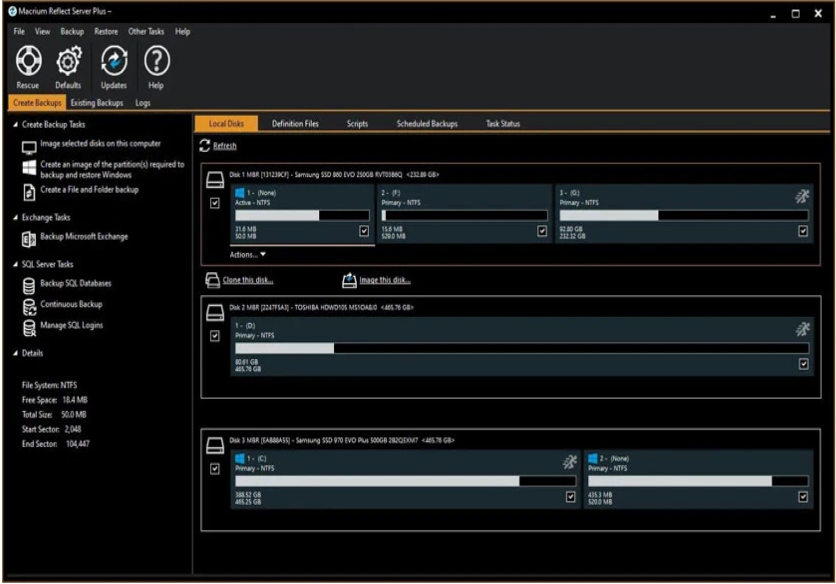
Macrium Reflect X Server System Requirements
System requirements depend on the Windows Server version, product release, and the storage environment.
Before installation, review the following:
Operating system: A Windows Server version supported by Macrium Reflect X Server.
Processor: A compatible processor architecture.
Memory: Sufficient RAM for Windows Server and the backup workload.
Storage: Space for installation, temporary operations, and backup images.
Permissions: Appropriate administrator privileges.
Backup destination: A supported local, external, or network storage location.
Recovery media: A suitable USB device or other supported bootable media.
Virtualization: Compatible Hyper-V components if using virtual boot functionality.
The exact minimum specifications should be taken from Macrium's official system requirements documentation rather than estimated.
Macrium Reflect X Server Free Download
Users searching for Macrium Reflect X Server free download should understand that the current Server product is commercial software.
Macrium provides a 30-day trial download for Macrium Reflect Server through its official product page. The trial allows prospective users to evaluate the software before purchasing a license.
It is important to distinguish between a free trial and a permanent free license.
Before downloading, review:
Trial duration and available features.
Server edition licensing.
Per-computer licensing requirements.
Annual license and upgrade terms.
Technical support availability.
Differences between Server and Server Plus.
Any feature exclusions in the trial.
The Server edition is licensed for individual computers, so organizations should confirm how many servers need protection before purchasing.
Macrium Reflect Free is a separate legacy product. Its availability and support status should not be confused with the current Reflect X Server trial.
For safety, always download the installer from the official Macrium website. Avoid modified installers, unauthorized activation tools, and suspicious third-party packages.
How to Download Macrium Reflect X Server
Follow these steps to obtain the legitimate application:
Visit the official Macrium website.
Open the Macrium Reflect Server product page.
Review the product description and available trial.
Check the supported Windows Server versions.
Review the licensing and trial conditions.
Select the official 30-day trial download option.
Follow the account or download instructions provided by Macrium.
Save the installer to a secure location.
Verify the downloaded file before installation.
Official download and product information:
https://www.macrium.com/products/business/standalone/server
How to Install Macrium Reflect X Server
Once the official installer is available, follow the developer's installation instructions.
Sign in to your Macrium account if required.
Locate the downloaded Reflect X Server installer.
Run the installer using an administrator account.
Review the setup options.
Follow the installation wizard.
Select the required components and configuration options.
Complete the installation.
Restart the server if prompted.
Launch Macrium Reflect and review the available backup options.
Activate the trial or enter a valid license when required.
For production servers, schedule installation carefully to avoid disrupting important business services.
How to Create a Server Backup
Creating a backup is one of the most important tasks when using Macrium Reflect X Server.
Step 1: Open Macrium Reflect
Launch the application and review the connected disks and available partitions.
Step 2: Select the Required Disk
Identify the server disk or partitions that need protection.
For a complete system backup, ensure that all required boot and operating system partitions are included.
Step 3: Choose a Backup Method
Select a suitable full, incremental, or differential backup approach according to your backup plan.
Step 4: Select a Destination
Choose a secure storage location for the backup image.
This may be an appropriate local, external, or network destination supported by the application.
Step 5: Configure the Backup Schedule
Set the schedule according to how frequently the server's data changes and the organization's recovery objectives.
Step 6: Start the Backup
Review the configuration and begin the backup operation.
Allow the process to complete without interrupting the server or disconnecting the backup destination.
Step 7: Verify the Backup
Use the available verification functionality and periodically perform restoration tests to confirm that the backup can be used.
How to Restore a Server Backup
A tested recovery procedure is essential for minimizing downtime after a server failure.
Step 1: Prepare Rescue Media
Create bootable rescue media before an emergency occurs.
Keep it accessible and verify that the server can boot from it.
Step 2: Start the Recovery Environment
If Windows cannot start, boot the server using the prepared rescue media.
Step 3: Locate the Backup Image
Connect or access the storage location containing the required backup.
Select the correct image and confirm that it belongs to the server being recovered.
Step 4: Select the Destination Disk
Choose the disk or partitions where the image should be restored.
Be especially careful because restoration can overwrite existing data.
Step 5: Review the Recovery Settings
Check the source image, destination layout, and available recovery options.
Step 6: Begin Restoration
Start the restoration process and allow it to finish.
Step 7: Verify the Recovered System
Restart the server and confirm that Windows, applications, and important services are operating correctly.
Recovery to different hardware may require additional compatibility steps or a suitable ReDeploy license.
Advantages and Disadvantages
Advantages
Image-based Windows Server backup.
Full, incremental, and differential backup methods.
File and folder protection.
Bare-metal recovery capabilities.
Rapid Delta Restore and Rapid Delta Clone for supported scenarios.
Automated backup scheduling.
Backup verification.
Rescue media creation.
Instant virtual booting through supported Hyper-V environments.
Image Guardian protection for supported backup files.
Disadvantages
The Server edition is commercial software.
The free download is an evaluation rather than a permanent free Server license.
Licensing is required for each protected computer.
Initial configuration may require technical knowledge.
Backup images can require substantial storage space.
Recovery procedures should be tested in advance.
Some advanced features have specific edition or file-system requirements.
Macrium Reflect X Server Alternatives
Organizations comparing server backup solutions may also consider the following applications.
Veeam Backup & Replication
Veeam Backup & Replication provides backup and recovery capabilities for virtual, physical, and cloud environments. It is worth evaluating for organizations managing larger infrastructure deployments.
Acronis Cyber Protect
Acronis Cyber Protect combines backup and recovery functionality with additional cybersecurity capabilities. Its available features depend on the selected product and subscription.
AOMEI Cyber Backup
AOMEI Cyber Backup provides centralized backup capabilities for supported systems and environments. It may be useful for organizations looking for server protection and management tools.
NAKIVO Backup & Replication
NAKIVO provides backup, replication, and recovery solutions for supported virtual, physical, and cloud environments.
Windows Server Backup
Windows Server includes a built-in backup utility that can provide basic system and data protection. It may be sufficient for simpler environments, although organizations with more advanced requirements may prefer dedicated backup software.
When comparing alternatives, consider recovery speed, supported systems, licensing, storage requirements, administration features, and technical support.
Frequently Asked Questions
What is Macrium Reflect X Server used for?
Macrium Reflect X Server is designed to back up and recover supported Windows Server systems. It provides disk imaging, file and folder backup, and system restoration capabilities.
Is Macrium Reflect X Server free to download?
Macrium offers a 30-day trial for the Server edition. Continued use requires an appropriate commercial license.
Does Macrium Reflect X Server support Windows Server?
Yes. The Server edition is designed for supported Windows Server operating systems. Check the current system requirements for exact compatibility.
Can Macrium Reflect X Server create full system backups?
Yes. It supports image-based backups of selected disks and partitions, including complete system backup configurations.
Does it support incremental and differential backups?
Yes. Macrium Reflect supports full, incremental, and differential backup methods.
What is Rapid Delta Restore?
Rapid Delta Restore is a technology designed to accelerate eligible image restoration operations by restoring changed data rather than rewriting every block.
Can I restore a server after hardware failure?
A suitable backup image can be used for system recovery. Restoring to different hardware may require additional compatibility steps and appropriate licensing.
Does Macrium Reflect X Server support virtual servers?
The product supports physical and virtual server backup scenarios. Specific compatibility depends on the virtualization platform and configuration.
What is the difference between Macrium Reflect Server and Server Plus?
Server Plus includes additional functionality for Microsoft Exchange and SQL database backup and recovery compared with the standard Server edition. Check the official product comparison for current details.
Where can I download Macrium Reflect X Server safely?
The recommended source is the official Macrium website:
https://www.macrium.com/products/business/standalone/server
Final Verdict
Macrium Reflect X Server is a dedicated backup and recovery solution for organizations that need to protect Windows Server systems. Its image-based backups, incremental and differential backup methods, file and folder protection, rescue media, and recovery technologies make it a useful option for business disaster recovery planning.
The software is particularly relevant to IT administrators and organizations that need structured protection for physical and virtual servers. However, successful data protection also depends on choosing suitable backup storage, configuring retention schedules, verifying backup images, and regularly testing recovery procedures.
If you are considering Macrium Reflect X Server free download, start with the official 30-day trial and review the current Server licensing options. Confirm operating system compatibility and feature requirements before deploying it in a production environment.