Hasleo Disk Clone Free Download: Disk Cloning and System Migration Tool
Upgrading a computer's storage can be challenging when an existing Windows installation contains applications, settings, documents, and other important data. Reinstalling everything on a new drive can take considerable time. Disk cloning software provides an alternative by copying the contents and structure of one drive to another.
Hasleo Disk Clone is a Windows utility designed for disk and partition cloning, system migration, and storage upgrades. It can be useful when moving an operating system to an SSD, replacing an older hard drive, or transferring data to another compatible storage device.
For users searching for a Hasleo Disk Clone free download, it is important to understand the software's features, supported operations, licensing, and safe installation options before using it.
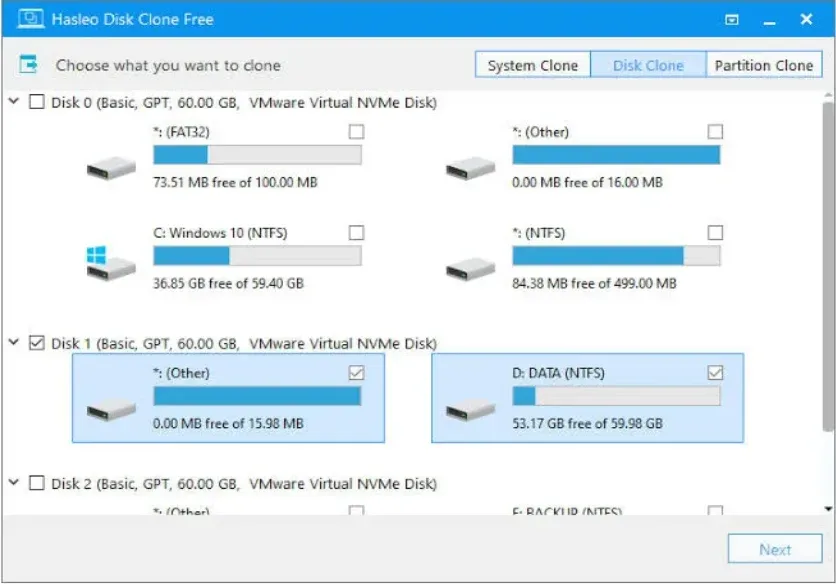
What Is Hasleo Disk Clone?
Hasleo Disk Clone is a disk-cloning application developed for Windows computers. Its primary purpose is to help users copy disks, partitions, or system environments from one storage device to another.
Unlike ordinary file-copying tools, disk cloning is intended to reproduce the structure and contents of a source drive. Depending on the selected operation and storage configuration, a clone can contain partitions, operating-system files, applications, and user data.
The software can therefore be useful for storage upgrades and system migration without requiring users to rebuild their entire computing environment from scratch.
Key Features of Hasleo Disk Clone
Disk-to-Disk Cloning
The disk-cloning function can copy the contents of one physical disk to another. This can be useful when replacing an existing HDD or SSD with another drive.
Before starting a clone, users should carefully verify which disk is the source and which is the destination.
Partition Cloning
Users can also work with individual partitions when a complete disk clone is unnecessary. Partition-level cloning can be useful for particular migration or storage-management tasks.
The appropriate option depends on the structure of the source disk and the intended use of the destination.
System Migration
Hasleo Disk Clone can help users migrate a Windows system to another storage device. This can be particularly useful when moving an existing Windows installation from an HDD to an SSD.
System migration can reduce the need to reinstall applications and configure the operating system again, although users should verify that the resulting installation boots correctly.
HDD to SSD Upgrades
One common reason to use cloning software is upgrading from a traditional hard disk drive to a solid-state drive.
A properly planned migration can allow users to move an existing Windows environment to the new SSD. The destination drive should have sufficient capacity for the data being transferred, and users should verify the drive configuration before beginning.
SSD-to-SSD Migration
The software can also be useful when replacing one SSD with another. For example, users may want to move their existing system to a larger SSD when their current storage capacity becomes insufficient.
Sector-by-Sector Cloning
Depending on the selected operation and version, cloning software can provide different methods for copying storage data. Sector-by-sector operations can reproduce storage sectors more directly, but they may require additional time and destination capacity.
Users should select cloning methods according to their specific requirements rather than enabling advanced options unnecessarily.
Disk Cloning Explained
Disk cloning creates a copy of a storage device's contents and, depending on the operation, its partition structure. This differs from simply dragging files from one folder to another.
For example, copying a Windows installation manually does not necessarily produce a bootable replacement drive. A properly performed system or disk clone is designed to preserve the elements required for the intended migration.
Disk cloning can be useful when:
Upgrading an HDD to an SSD
Replacing an aging storage drive
Moving a system to a larger drive
Migrating an existing Windows installation
Creating a duplicate storage environment
The exact result depends on the source disk, destination disk, partition layout, and cloning mode selected.
Hasleo Disk Clone for SSD Upgrades
Replacing an HDD with an SSD is one of the common scenarios for disk-cloning software. An SSD can provide faster storage performance and improved responsiveness compared with many traditional hard drives.
Instead of reinstalling Windows manually, users can migrate the existing system to the new SSD. Before beginning, it is important to check that the destination drive has enough capacity and that the computer supports the required connection interface.
After cloning, users should verify the new drive before removing or formatting the original disk.
Hasleo Disk Clone for System Migration
System migration involves transferring an existing operating system environment to another storage device. This can save time when users want to maintain their current Windows configuration.
A migration may include Windows system files, installed applications, user accounts, and other data associated with the source installation. However, hardware changes can sometimes affect activation, drivers, boot configuration, or application behavior.
For this reason, users should keep the original drive intact until they have confirmed that the migrated system works correctly.
How to Clone a Disk with Hasleo Disk Clone
The general cloning process is straightforward, but selecting the correct drives is extremely important.
Step 1: Prepare the Drives
Connect the source and destination drives to the computer. Make sure the destination drive is recognized by Windows and has enough available capacity.
Step 2: Select the Cloning Operation
Open Hasleo Disk Clone and choose the appropriate disk, partition, or system migration function.
Step 3: Select the Source
Choose the drive or partition containing the data you want to migrate. Carefully check the disk name and capacity before proceeding.
Step 4: Select the Destination
Choose the new drive as the destination. Be especially careful because the cloning process can overwrite existing information on the destination drive.
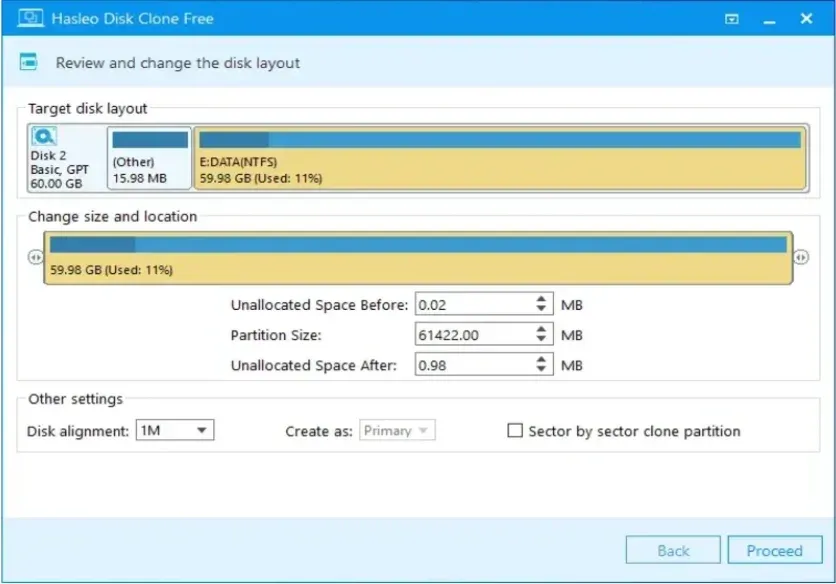
Step 5: Review the Layout
Check the destination partitions and available capacity. If the destination drive is larger, some cloning workflows allow the partition layout to be adjusted.
Step 6: Start the Clone
Begin the operation and allow the software to complete the transfer. Avoid disconnecting either drive or shutting down the computer during the process.
Step 7: Verify the Result
After cloning, check the destination drive. For a system migration, verify that Windows can boot correctly from the new storage device before making changes to the original drive.
Bootable Media and Recovery
Some disk-management workflows require an environment outside the normal Windows desktop. Bootable media can provide a way to perform certain operations when the installed Windows system cannot be used normally.
If your particular Hasleo Disk Clone version provides bootable-media functionality, review its documentation before creating or using the media. Keep important files backed up separately because cloning is not a substitute for a comprehensive backup strategy.
Hasleo Disk Clone System Requirements
System requirements can vary depending on the specific release of Hasleo Disk Clone. Users should check the official product information for the current supported Windows versions and hardware requirements.
Before installation, also consider:
Available disk space
Supported storage interfaces
Source and destination drive capacities
Windows compatibility
Administrative permissions
Checking compatibility beforehand can help prevent problems during installation or migration.
How to Download and Install Hasleo Disk Clone
For the safest experience, download Hasleo Disk Clone from the official Hasleo website or another authorized source.
A typical installation process includes:
Download the appropriate installer.
Open the downloaded installation file.
Follow the setup instructions.
Select the required installation options.
Complete the installation.
Launch Hasleo Disk Clone.
Review the available disk and migration tools.
Always confirm the software version and licensing terms before installation.
Hasleo Disk Clone Free Download and Licensing
Users searching for Hasleo Disk Clone free download should distinguish between legitimate free functionality, evaluation versions, and features that may require a commercial license.
Software licensing can change between editions and releases, so users should check the current terms provided by Hasleo before relying on a particular feature.
Avoid modified installers, cracks, or unauthorized copies. Besides potential licensing issues, files obtained from untrusted sources can contain unwanted software or security threats.
Pros and Cons of Hasleo Disk Clone
Pros
Designed specifically for disk-cloning tasks
Supports disk and partition migration
Useful for HDD-to-SSD upgrades
Can help migrate existing Windows environments
Provides options for different storage-management scenarios
Suitable for both home and technical users
Cons
Cloning requires careful source and destination selection
Compatibility can vary depending on Windows and hardware configurations
Some advanced functionality may depend on the edition or license
Disk cloning should not replace regular backups
Safety Tips Before Cloning a Disk
Disk cloning can modify or overwrite data, so preparation is essential.
Before starting:
Back up important personal files.
Confirm the source disk carefully.
Confirm the destination disk carefully.
Make sure the destination has adequate capacity.
Keep the computer connected to reliable power.
Do not disconnect drives during the cloning process.
Keep the original drive untouched until the clone has been tested.
Verify the cloned Windows installation before formatting the original drive.
These precautions can reduce the risk of accidental data loss.
Who Should Use Hasleo Disk Clone?
Hasleo Disk Clone can be useful for home users upgrading their computer storage, PC technicians performing migrations, and users who want to move an existing Windows installation to another drive.
It may be particularly relevant when replacing a smaller drive with a larger one or moving from an HDD to an SSD.
Users looking primarily for cloud backup, continuous file synchronization, or long-term backup management may need a different type of software because cloning and backup serve different purposes.
Conclusion
Hasleo Disk Clone is a Windows-oriented disk cloning and migration utility designed to help users transfer disks, partitions, and system environments between compatible storage devices. Its features can be useful for HDD-to-SSD upgrades, SSD replacements, system migration, and other storage-management tasks.
If you are looking for a Hasleo Disk Clone free download, check the current official edition, system requirements, and licensing terms before installation. Most importantly, back up important data and carefully verify the source and destination drives before starting any cloning operation.