Symantec Endpoint Protection Free Download – Features, Installation, System Requirements & Review
Introduction
Cybersecurity is an essential part of managing computers, servers, and business networks. Organizations need reliable tools to protect their devices against malware, suspicious applications, network attacks, and other security threats. Symantec Endpoint Protection is an enterprise-focused security solution designed to help businesses protect endpoints through multiple layers of threat prevention, detection, and centralized management.
The software combines traditional antivirus protection with additional security technologies, including firewall capabilities, intrusion prevention, application controls, and centralized security policies. It is designed primarily for organizations that need to manage endpoint security across multiple computers rather than individual home users.
If you are searching for Symantec Endpoint Protection free download, this guide explains its main features, management tools, supported environments, installation process, licensing considerations, and available download options.
What Is Symantec Endpoint Protection?
Symantec Endpoint Protection (SEP) is an endpoint security product originally developed by Symantec and now part of Broadcom's enterprise security portfolio. It helps organizations protect Windows, macOS, and other supported endpoint environments, depending on the product release and available client packages.
Unlike a basic antivirus application, SEP provides several security technologies in one managed solution. Administrators can deploy endpoint clients, configure protection policies, monitor security events, and review detected threats through centralized management tools.
The product is particularly useful for:
Small and large businesses
Enterprise IT departments
Educational institutions
Organizations managing multiple workstations
System administrators responsible for endpoint security
Networks that require centrally managed protection policies
The exact capabilities depend on the SEP version, operating system, license, and deployment configuration.
Key Features of Symantec Endpoint Protection
1. Antivirus and Anti-Malware Protection
Symantec Endpoint Protection provides protection against common malware threats, including viruses, worms, Trojans, and other malicious software. Its security technologies help identify and block threats before they can compromise protected systems.
Security definitions and product updates help maintain protection against newly identified threats. Administrators can configure scanning schedules and review detection events according to organizational policies.
2. Real-Time Threat Protection
Real-time protection monitors supported files and system activity to identify potentially harmful behavior. This helps reduce the risk of malware executing or spreading through an organization's computers.
The available monitoring and prevention technologies vary by client version and operating system.
3. Advanced Threat Detection
Endpoint security requires more than traditional file scanning. SEP includes additional protection technologies designed to identify suspicious activity and certain previously unknown threats.
Depending on the installed version and configuration, these technologies can help detect unusual application behavior, malicious processes, and other indicators of compromise.
4. Firewall Protection
The product includes firewall capabilities in supported client environments. These controls help administrators manage network traffic and apply rules that determine which connections are allowed or blocked.
Firewall settings can be useful for organizations that need consistent network security policies across multiple computers.
5. Intrusion Prevention System
Intrusion prevention helps protect endpoints against certain network-based attacks and suspicious traffic patterns.
SEP's intrusion prevention capabilities are designed to provide another layer of defense alongside antivirus scanning and firewall protection. Available features depend on the platform and product configuration.
6. Application and Device Control
Organizations often need to control which applications and removable devices can interact with their computers. Supported SEP configurations provide application and device control capabilities that administrators can use to enforce security policies.
These controls can help restrict unauthorized applications, manage removable storage access, and reduce risks associated with unapproved software.
7. Web and Network Threat Protection
Web-based threats can enter an organization through malicious websites, unsafe downloads, and suspicious network activity. Symantec Endpoint Protection includes security technologies designed to help identify and block certain web and network threats.
The protection available depends on the installed client, enabled components, and organizational configuration.
8. Automatic Security Updates
Regular updates are important for maintaining effective endpoint protection. SEP supports security content updates and product maintenance releases through supported update mechanisms.
Organizations can configure update distribution according to their network environment. In managed deployments, administrators may use centralized infrastructure to distribute updates to connected clients.
9. Security Monitoring and Reporting
SEP provides security information that helps administrators understand the status of protected devices. Depending on the management configuration, reports and logs can show detected threats, client status, policy information, and other security events.
These tools help IT teams investigate problems and maintain consistent endpoint protection.
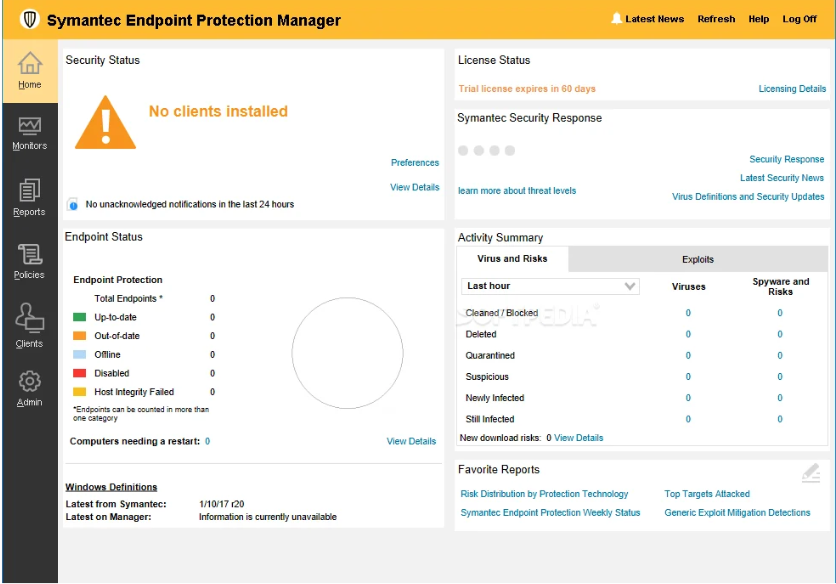
Symantec Endpoint Protection Manager (SEPM)
One of the important components of a managed SEP deployment is Symantec Endpoint Protection Manager (SEPM).
SEPM is the centralized management component that allows administrators to control supported SEP clients from a management console.
Its main responsibilities include:
Deploying and managing endpoint clients
Creating and assigning security policies
Monitoring endpoint protection status
Reviewing threat detections and security events
Managing update distribution
Configuring supported firewall and application controls
Generating reports for security administration
SEPM is especially useful for organizations that need to manage many computers. Instead of configuring every endpoint individually, administrators can apply policies centrally and monitor the deployment from one management environment.
Keep in mind that the management server and endpoint client are separate components. Their version numbers, operating-system requirements, and installation packages may differ.
What's New in Recent Versions?
Symantec Endpoint Protection belongs to the 14.x product family, which has received different client and management releases over time.
When selecting an installer, it is important to distinguish between:
SEP client version: The software installed on protected endpoint computers.
SEPM version: The management server used to administer supported clients.
Maintenance releases: Updates that may include security fixes, compatibility improvements, and product corrections.
Broadcom publishes release information and system requirements for its supported product versions. Always check the current documentation before deploying a particular release, especially in environments running newer Windows or Windows Server editions.
Do not assume that a newer management-server version means every older client package has the same version number or requirements.
Benefits of Using Symantec Endpoint Protection
Multiple Layers of Security
SEP combines several endpoint security technologies rather than relying exclusively on traditional antivirus scanning. This layered approach can help organizations address different types of security threats.
Centralized Administration
SEPM allows administrators to manage supported endpoints through a centralized console. This can simplify policy configuration and security monitoring across larger networks.
Business-Oriented Controls
Application control, device management, firewall settings, and other administrative features are useful for organizations that need consistent security policies.
Threat Monitoring
Security logs, alerts, and reports can help IT teams investigate detected threats and identify endpoints that may require attention.
Flexible Deployment
Organizations can choose a deployment approach based on their network structure, number of devices, supported operating systems, and management requirements.
System Requirements and Compatibility
Symantec Endpoint Protection requirements depend on the client release, operating system, architecture, and enabled components. SEPM has its own requirements and should be checked separately.
Before installing the software, review the documentation for the exact release you intend to use.
Requirement | What to check |
|---|---|
Operating system | Confirm that your Windows, macOS, or other supported platform is listed for the selected client |
Architecture | Choose the appropriate supported 64-bit or legacy package |
Processor | Meet the CPU requirements for the specific release |
RAM | Provide sufficient memory for the operating system and security components |
Storage | Allow space for installation files, security content, logs, and updates |
Network | Check connectivity to management servers and update sources |
Management server | Verify SEPM operating-system, database, and hardware requirements separately |
Important: Do not rely on requirements published for an older SEP release when installing a newer one. Broadcom's official release documentation is the best place to confirm current compatibility.
Symantec Endpoint Protection Free Download
Users searching for Symantec Endpoint Protection free download should understand that SEP is an enterprise security product, not simply a permanently free consumer antivirus application.
Broadcom provides product downloads through its official support and software download channels. Access to particular installers may require a Broadcom account, an active entitlement, a valid license, or an eligible support arrangement.
Before downloading, consider the following steps:
Visit Broadcom's official support website.
Sign in using an eligible Broadcom account.
Locate Symantec Endpoint Protection in the available product downloads.
Select the required release and installation package.
Review the release notes and system requirements.
Download the correct client or management-server installer.
Confirm that your organization has the appropriate licensing rights.
Is Symantec Endpoint Protection Completely Free?
No. Symantec Endpoint Protection is generally licensed for organizational use. Download access does not automatically provide a free license or unrestricted permission to use the software.
Evaluation availability and download eligibility can depend on Broadcom's current policies and your account status. Check directly with Broadcom or an authorized reseller for current trial and licensing information.
Avoid modified installers, unauthorized license keys, and unofficial download packages. They may contain malware, outdated files, or unauthorized changes that weaken endpoint security.
How to Install Symantec Endpoint Protection
The installation process depends on whether you are installing an individual endpoint client or deploying the software through a managed SEPM environment.
Step 1: Check Compatibility
Confirm that the target computer meets the requirements for your selected SEP client release. Check the operating system, architecture, available storage, and any required updates.
Step 2: Obtain the Official Installer
Download the installation package through Broadcom's official download portal using an account with the appropriate access.
Choose the correct package for the endpoint or management component you intend to install.
Step 3: Prepare the Computer
Close unnecessary applications and make sure the system is ready for installation. If another antivirus product is installed, follow the vendor's migration or removal guidance to avoid conflicts.
Step 4: Start the Installation
Run the authorized installer and follow the displayed setup instructions. Depending on the package, you may need to select installation components or accept administrator permissions.
Step 5: Complete the Setup
Allow the installation process to finish. Restart the computer if the installer requests it.
Step 6: Configure Protection
For a managed deployment, connect the client to the appropriate management environment and apply the organization's security policies. For standalone configurations, review the available local protection settings.
Step 7: Update and Verify
Check that security content is current and that the endpoint reports an active protection status. Administrators should also confirm that managed clients communicate correctly with SEPM.
How to Use Symantec Endpoint Protection
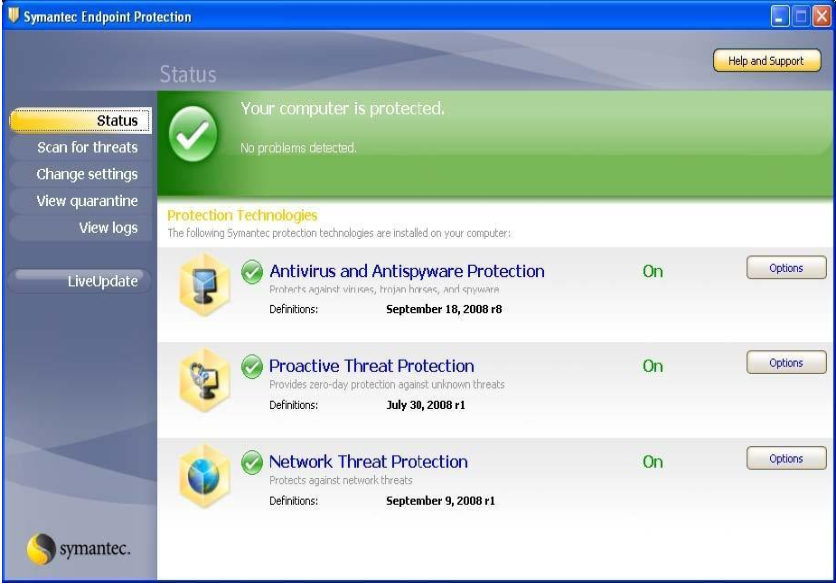
After installation, users and administrators can check the security status of protected systems and review available protection features.
Check Protection Status
Open the SEP client interface and review its security status. Look for warnings, disabled components, or update problems that require attention.
Run a Security Scan
Use the available scanning options to check files and system areas for potential threats. The scan types and configuration options depend on the installed release.
Review Detected Threats
Check threat notifications and security logs to understand what the software has detected. Follow your organization's incident-response procedures when a serious threat is identified.
Check Security Updates
Confirm that virus definitions and other security content are up to date. If updates fail, investigate network access, update-source configuration, and management-server communication.
Manage Policies Through SEPM
Administrators can use the management console to review clients, assign policies, configure supported protection settings, and monitor security events.
Pros and Cons of Symantec Endpoint Protection
Pros
Multiple layers of endpoint security
Antivirus and anti-malware protection
Firewall and intrusion prevention capabilities
Centralized management through SEPM
Application and device control in supported configurations
Security monitoring and reporting
Business-focused deployment and policy tools
Cons
Commercial licensing is generally required
Download access may require Broadcom account entitlements
Initial deployment can be complex for inexperienced users
SEPM requires separate planning and administration
Features and compatibility vary by release and platform
Not necessarily the simplest choice for individual home users
Symantec Endpoint Protection vs. Other Security Software
Organizations evaluating endpoint security may compare SEP with other business-focused security products.
Product | General focus |
|---|---|
Symantec Endpoint Protection | Managed endpoint protection with multiple security layers and centralized administration |
Microsoft Defender for Business | Business endpoint protection integrated with Microsoft's security ecosystem |
ESET PROTECT | Endpoint security with centralized management and policy controls |
Bitdefender GravityZone | Business endpoint security and centralized security management |
The best choice depends on an organization's device count, existing IT infrastructure, operating systems, security policies, budget, and administrative requirements. Compare current editions and licensing terms before making a purchasing decision.
Frequently Asked Questions
1. Is Symantec Endpoint Protection free to download?
Broadcom may provide downloads to eligible users, but SEP is generally a commercially licensed enterprise product. Download availability does not mean that the software is permanently free to use.
2. Where can I download Symantec Endpoint Protection?
Use Broadcom's official support and software download portal. Access to installers may require an account and appropriate product entitlement.
3. What is the difference between SEP and SEPM?
SEP refers to the endpoint protection client installed on computers. SEPM is the management server and console used to administer supported SEP clients centrally.
4. Does Symantec Endpoint Protection include a firewall?
Firewall capabilities are available in supported SEP configurations. The exact features depend on the client version, platform, and enabled components.
5. Can Symantec Endpoint Protection protect multiple computers?
Yes. It is designed for organizational deployments involving multiple endpoints. The number of devices you can protect depends on your license and deployment arrangement.
6. Is Symantec Endpoint Protection suitable for home users?
It can provide endpoint protection, but its management and licensing model is primarily designed for businesses and organizations. Individual users may prefer a simpler consumer security product.
7. Does Symantec Endpoint Protection support Windows 11?
Compatibility depends on the exact SEP client release and Windows 11 build. Check Broadcom's current system requirements before installation.
8. Is SEP the same as Symantec Endpoint Security?
The product names and enterprise security portfolio have evolved over time. Check the exact product, release, and licensing information in Broadcom's documentation rather than assuming that similarly named products are interchangeable.
9. Can I install SEP without SEPM?
Some deployment configurations may support standalone or unmanaged clients, while centrally managed environments use SEPM. The appropriate installation package depends on your organization's requirements.
10. Is it safe to download SEP from third-party websites?
The safest option is Broadcom's official download portal. Third-party installers may be outdated, modified, or bundled with unwanted software.
Final Verdict
Symantec Endpoint Protection is a business-oriented endpoint security solution that combines antivirus protection, firewall capabilities, intrusion prevention, application controls, and centralized administration. Its management tools make it suitable for organizations that need to protect and monitor multiple computers under consistent security policies.
Before choosing a release, review the supported operating systems, client and management-server requirements, licensing conditions, and deployment documentation. If you are looking for a Symantec Endpoint Protection free download, start with Broadcom's official portal and confirm whether your account qualifies for the required installer.
For a safer installation and dependable updates, use authorized software packages and keep the endpoint clients and management infrastructure on supported releases.