PowerISO Download – Free Download, Features & Installation Guide
If you regularly work with ISO files, disc images, bootable media, or virtual drives, having a reliable image-management utility can make these tasks much easier. PowerISO is a popular Windows application designed for creating, opening, editing, extracting, mounting, and converting disc-image files.
People searching for a PowerISO free download should understand the difference between downloading the software and obtaining a fully licensed version. PowerISO can be downloaded and evaluated, while continued use and certain functionality may require registration according to the current license terms.
This guide explains PowerISO's features, supported image formats, installation process, ISO creation, virtual drives, bootable media, safety considerations, and licensing options.

What Is PowerISO?
PowerISO is a disc-image utility designed primarily for Windows computers. It provides tools for working with ISO and other supported image formats without requiring users to handle physical discs for every task.
With PowerISO, users can perform tasks such as:
Create ISO images
Open and browse disc images
Extract files from image files
Edit image contents
Convert supported image formats
Mount images as virtual drives
Create bootable media
Work with CD, DVD, and Blu-ray images
The software can therefore be useful for everyday file management as well as installation and recovery workflows.
PowerISO Download
When searching for a PowerISO download, the safest approach is to obtain the installer from the official PowerISO website.
Before downloading, check:
The current software version
Supported Windows versions
Available 32-bit or 64-bit options, where applicable
Trial limitations
Current licensing terms
Available installation packages
A free download of the installer does not necessarily mean that the complete application is permanently free. If you want unrestricted use, review the current registration requirements.
Avoid unofficial “full version,” cracked, keygen, or pre-activated packages. These can be modified and may expose your computer to malware or unwanted software.
Key Features of PowerISO
ISO Creation
PowerISO can create ISO images from files and folders. This is useful when you want to package a collection of files into a single disc-image file.
For example, you can organize installation files, documents, applications, or other data and save them as an ISO for storage or later use.
ISO Editing
One useful feature of an image-management application is the ability to modify the contents of an image.
Depending on the supported image format, PowerISO can allow users to add, remove, or organize files within an image before saving the updated image.
This can be more convenient than extracting an entire image, modifying the contents, and rebuilding it manually.
ISO Extraction
PowerISO can extract files and folders from supported disc images.
This is useful when you only need specific files from an ISO and do not want to burn the image to physical media.
A typical workflow is:
Open the image file.
Browse its contents.
Select the required files.
Choose an extraction location.
Access the extracted files through Windows Explorer.
Virtual Drive Support
PowerISO can mount supported disc images as virtual drives.
After mounting an image, Windows can treat it similarly to an inserted physical disc. This can be particularly useful for software installation media, archived discs, and other ISO-based content.
When finished, the virtual image can be unmounted without physically removing anything.
Bootable Media
PowerISO also provides tools for working with bootable images and media.
Users can create or work with bootable ISO files and, where supported, create bootable USB devices.
This can be useful for operating-system installation, recovery environments, diagnostics, and other specialized tasks.
Always verify the source of a bootable image before using it.
Disc Image Conversion
Different applications and optical-disc tools may use different image formats. PowerISO supports conversion between certain disc-image formats.
This can help when an image needs to be used by software that expects a particular format.
Available conversion options can vary depending on the source and destination formats supported by the installed version.
Supported File and Image Formats
PowerISO is designed to work with several common disc-image formats. Depending on the version, users may encounter formats such as:
Format | Typical Use |
|---|---|
ISO | Standard disc-image format |
BIN | Binary disc-image data |
DAA | PowerISO-associated image format |
CDI | Disc-image format used by some applications |
NRG | Nero disc-image format |
MDF/MDS | Disc-image data and descriptor files |
IMG | Generic image file |
Other formats | Support depends on the current version |
Because format support can change, check the current PowerISO documentation if you need to work with a less common image type.
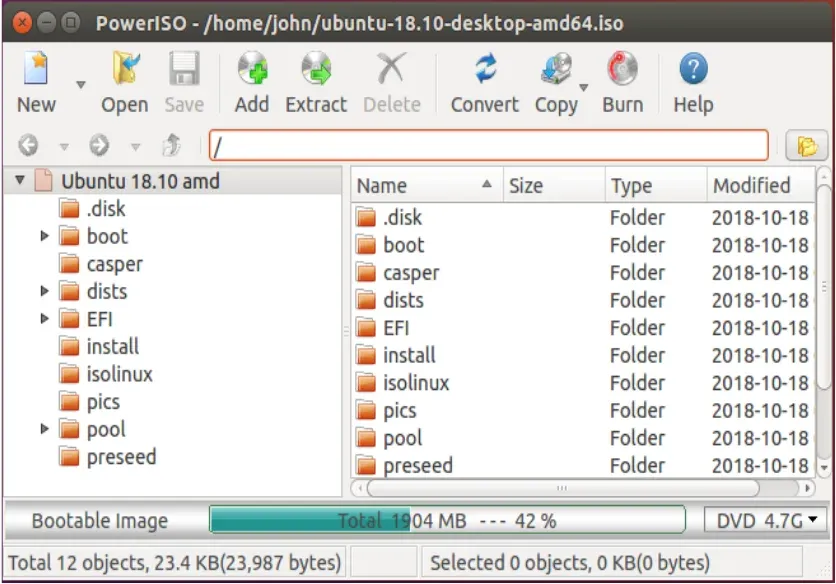
PowerISO System Requirements
PowerISO is designed for Windows environments, but exact system requirements can vary between releases.
Before installation, check the current requirements for:
Supported Windows versions
CPU architecture
Available RAM
Required disk space
Administrative permissions
Virtual-drive functionality
CD/DVD/Blu-ray hardware, if physical media is involved
For most ordinary ISO operations, modern Windows hardware should provide sufficient resources.
How to Download PowerISO
Downloading PowerISO is straightforward when using the official source.
Step 1: Find the Official Download
Visit the official PowerISO website and locate the current download section.
Step 2: Choose the Appropriate Version
Select the installer that matches your Windows environment.
Step 3: Download the Installer
Save the setup file to a location you can easily access.
Step 4: Verify the Source
Make sure the installer came from a trusted source before opening it.
Step 5: Start Installation
Run the downloaded setup file and follow the installation instructions.
If you are evaluating the software, review the current trial terms before relying on it for long-term use.
How to Install PowerISO
After downloading the installer, follow these general steps:
Open the PowerISO setup file.
Review the license agreement.
Select the installation location if prompted.
Choose available installation options.
Continue through the setup wizard.
Wait for the installation to finish.
Launch PowerISO.
If the application requests administrator permission, verify that you intentionally started the official installer before allowing the operation.
How to Create an ISO File
Creating an ISO is one of the most common PowerISO tasks.
Step 1: Launch PowerISO
Open the application from the Windows Start menu or desktop shortcut.
Step 2: Add Files
Choose the option for creating an image and add the files or folders you want to include.
Step 3: Organize the Contents
Review the image structure and make sure all required files are present.
Step 4: Select ISO Output
Choose ISO as the desired output format.
Step 5: Save the Image
Select a destination and save the ISO file.
The resulting image can then be stored, transferred, mounted, or used for other supported operations.
How to Mount an ISO Image
Mounting an ISO allows you to access its contents without burning the image to a physical disc.
A general PowerISO workflow is:
Open PowerISO.
Select the ISO image.
Choose the virtual-drive or mount option.
Select an available virtual drive.
Open the mounted drive through Windows Explorer.
Access the required files.
When you are finished, safely unmount the image.
Windows itself also provides built-in ISO mounting functionality on modern versions, so PowerISO is not always required simply to open an ISO.
How to Create a Bootable USB
PowerISO can also be used for certain bootable-media workflows.
Before starting, remember that creating bootable media can erase existing data on the USB drive.
A typical process involves:
Connect a suitable USB drive.
Back up any important files on the USB.
Open PowerISO's bootable-media functionality.
Select the appropriate ISO image.
Choose the USB device.
Review the selected device carefully.
Start the writing process.
Wait until the operation is complete.
Never select a USB drive containing important data unless you have already backed it up.
Is PowerISO Free?
This is an important question for anyone searching for PowerISO free download.
PowerISO can be downloaded for evaluation, but downloading the installer does not necessarily provide unrestricted use of every feature indefinitely.
The available functionality can depend on the current trial and licensing terms.
Before using PowerISO for long-term work, check:
Trial duration
Trial restrictions
Registration requirements
Current license pricing
Personal or commercial usage terms
If you only need occasional ISO operations, Windows' built-in tools or free alternatives may also meet your requirements.
Is PowerISO Safe?
PowerISO should be downloaded from a legitimate and trusted source.
For safer use:
Download the installer from the official source.
Keep Windows security features enabled.
Avoid cracked versions.
Avoid key generators.
Don't install modified repacks.
Keep the application updated.
Scan suspicious downloads before opening them.
Back up important data before creating bootable media.
A legitimate installer is preferable to unofficial packages that claim to provide an activated version for free.
Benefits of PowerISO
PowerISO offers several useful capabilities for users who frequently work with disc images.
Multiple Image Operations
Users can create, edit, extract, mount, and convert supported image files from one application.
Virtual Drive Functionality
Mounting images can reduce the need for physical optical media.
Bootable Media Tools
The software can assist with bootable image and USB workflows.
Convenient ISO Management
The interface brings many disc-image tasks together in one place.
Support for Multiple Formats
PowerISO works with several commonly used image formats, although exact support depends on the version.
Common PowerISO Problems and Solutions
PowerISO Will Not Install
Check whether your Windows version is supported and whether the installer was downloaded correctly.
If necessary, download a fresh installer from the official source.
ISO Will Not Mount
The image may be damaged or unsupported. Try opening the image in PowerISO first and check whether its contents can be read.
Bootable USB Does Not Start
Verify that the ISO is actually bootable and that the USB was created correctly. You may also need to check your computer's UEFI or BIOS boot configuration.
Files Are Missing From an Image
The image may be incomplete or corrupted. If possible, obtain the original image again and compare its integrity.
License or Registration Problems
Make sure you are using valid registration information and the correct version of the software. Avoid unofficial activation tools.
PowerISO Alternatives
Several alternatives can handle some or all of the tasks commonly associated with PowerISO.
Windows built-in ISO tools can mount ISO files without requiring third-party software.
7-Zip is useful for opening and extracting many archive and image-related file types.
WinCDEmu focuses on mounting disc images as virtual drives.
ImgBurn provides optical-disc image creation and burning capabilities.
AnyToISO focuses on creating and converting ISO images.
Rufus is particularly useful when the main goal is creating bootable USB drives from ISO files.
The best alternative depends on whether your primary requirement is ISO extraction, image creation, virtual mounting, or bootable USB creation.
Tips for Using PowerISO
Follow these practices for a smoother experience:
Keep original ISO files backed up.
Verify important images before using them.
Use reliable USB drives for bootable media.
Back up USB data before writing an image.
Keep sufficient storage available.
Safely unmount virtual drives.
Download images only from trusted sources.
Use legitimate software licenses.
Don't use unknown activation tools.
Frequently Asked Questions
Is PowerISO free to download?
PowerISO can be downloaded for evaluation, but the current licensing terms determine which features and duration are available without registration.
Is PowerISO safe?
The safest option is to download PowerISO from its legitimate official source and avoid modified, cracked, or pre-activated installers.
Can PowerISO create ISO files?
Yes. PowerISO is designed to create ISO images from files, folders, and supported disc sources.
Can PowerISO mount ISO images?
Yes. PowerISO provides virtual-drive functionality for mounting supported disc images.
Can PowerISO create a bootable USB?
PowerISO provides bootable-media functionality for supported ISO and USB workflows. Always back up the USB drive before writing to it.
What formats does PowerISO support?
PowerISO supports several disc-image formats, including ISO, BIN, DAA, CDI, NRG, MDF/MDS, and IMG, although exact support can depend on the installed version.
Does PowerISO work on Windows 11?
PowerISO is designed for Windows, but users should check the current official system requirements to confirm compatibility with their particular Windows release.
What is the difference between the PowerISO trial and registered version?
The trial allows users to evaluate the software, while registration provides licensed use according to the current product terms. Trial limitations may apply.
Final Thoughts
PowerISO is a versatile utility for managing ISO files and other disc images. Its capabilities include creating and editing images, extracting files, mounting virtual drives, converting supported formats, and working with bootable media.
For users searching for a PowerISO free download, it is important to distinguish between a freely downloadable installer, an evaluation version, and a fully licensed product. Always check the current official terms before using the software beyond its evaluation period.
For security and reliability, download PowerISO from a trusted source and avoid cracked, modified, or pre-activated versions.