Adobe Bridge 2026 Free Download: Organize and Manage Creative Assets
Managing a large collection of photographs, videos, design files, and other creative assets can become difficult when files are scattered across multiple folders and drives. Adobe Bridge 2026 is designed to provide a centralized workspace for browsing, organizing, reviewing, and managing digital assets.
For users searching for an Adobe Bridge 2026 free download, the application is particularly useful for photographers, designers, video creators, and other creative professionals who need better control over their file libraries. Bridge works alongside applications in the Adobe ecosystem and provides tools for previewing files, managing metadata, creating collections, and performing batch operations.

What Is Adobe Bridge 2026?
Adobe Bridge is a digital asset management and file-browsing application from Adobe. It allows users to navigate folders, inspect creative files, organize assets, and access useful information without having to open every file in its dedicated application.
Instead of replacing Photoshop, Illustrator, or other creative applications, Bridge can act as a central hub for locating and preparing assets before opening them in the appropriate Adobe software.
Users can browse images, video files, PDFs, design documents, and other supported formats from a single interface.
Key Features of Adobe Bridge 2026
Centralized File Browsing
Bridge provides a visual interface for navigating folders and viewing their contents. Thumbnail previews make it easier to identify images and other supported files without opening them individually.
This can be especially helpful when working with large collections of photographs or creative assets.
Thumbnail and File Previews
Visual previews allow users to quickly inspect files. The preview experience can make it easier to select the correct image, document, or media file before continuing to another application.
Metadata Management
Adobe Bridge provides tools for viewing and editing metadata associated with supported files. Users can add information such as keywords, descriptions, copyright details, and other organizational data.
Metadata can make large collections easier to search and categorize.
Keywords and Labels
Users can organize assets with keywords, ratings, and labels. For example, photographs can be categorized according to location, project, subject, event, or other criteria.
These organizational tools can be valuable when managing thousands of files.
Collections
Collections allow users to group files for a particular project or purpose without necessarily changing the physical folder structure. This can provide another way to organize assets according to workflow.
Batch File Renaming
When working with large groups of files, manually renaming every item can be time-consuming. Bridge provides batch-renaming capabilities that allow users to apply consistent naming patterns to multiple files.
This can be useful for photographs, project assets, exported files, and other collections.
Adobe Bridge 2026 Interface
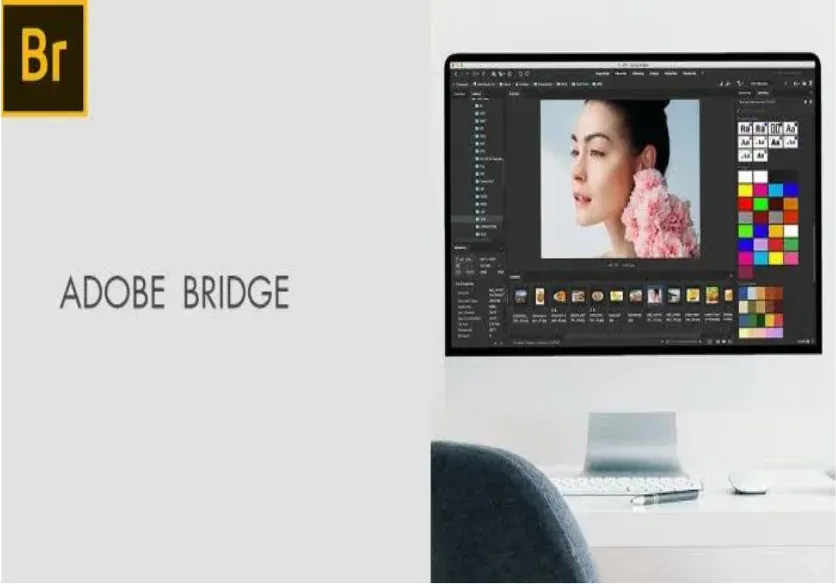
Adobe Bridge uses a panel-based interface that can be adjusted to suit different workflows. Common areas include file navigation, content thumbnails, previews, and metadata information.
Users can browse folders and then select individual assets to view additional information. Workspaces can be arranged according to the type of task being performed.
For photographers, a preview-focused workspace may be useful, while users working with metadata may prefer to keep information panels easily accessible.
Organizing Photos and Creative Assets
One of the main advantages of Bridge is its ability to help users manage large creative libraries.
A practical workflow can include:
Creating an organized folder structure.
Importing or storing assets in appropriate locations.
Reviewing thumbnails and previews.
Applying ratings or labels.
Adding relevant keywords.
Editing metadata where necessary.
Creating collections for specific projects.
Opening selected files in the appropriate Adobe application.
This workflow can reduce the time spent manually searching through folders.
Adobe Bridge 2026 Metadata Tools
Metadata can provide useful information about a digital asset. Depending on the file format, metadata may include camera information, creation dates, copyright information, keywords, descriptions, and other details.
Bridge allows users to inspect available metadata and, where supported, edit or add information.
Photographers can use keywords to categorize images, while designers and agencies can use metadata to identify projects, clients, usage information, or copyright details.
Batch Workflows in Adobe Bridge
Batch processing is useful when the same operation needs to be applied to many files.
Adobe Bridge can assist with tasks such as batch renaming and other file-management workflows. Automating repetitive organizational work can be particularly valuable for users who regularly handle large groups of assets.
For example, instead of renaming hundreds of photographs individually, users can establish a naming pattern and apply it to a selected group.
Adobe Bridge and Camera Raw
Bridge can work closely with Adobe Camera Raw for supported RAW photographs. Users can browse their images in Bridge and open selected files for RAW processing.
This creates a convenient workflow for photographers who want to review a large image collection before making detailed adjustments.
After selecting images, users can continue their work in Camera Raw, Photoshop, or another appropriate Adobe application.
Adobe Bridge and Photoshop Workflow
Bridge can also complement Photoshop-based workflows. Instead of searching through folders manually from inside Photoshop, users can locate and review assets in Bridge before opening them for editing.
A typical workflow might involve browsing a project folder, identifying the required image, reviewing its metadata and preview, and then sending it to Photoshop for editing.
This separation between asset management and detailed image editing can help keep creative projects organized.
Adobe Bridge 2026 for Video and Design Files
Bridge is not limited to photographs. It can also help users browse and organize various creative assets, including supported video files, PDFs, and design documents.
For video creators and designers, having a centralized browsing tool can make it easier to locate project resources before opening them in applications such as Premiere Pro or other compatible Adobe software.
The exact preview and metadata capabilities depend on the file format and installed software.
Adobe Bridge 2026 System Requirements
System requirements can vary according to the specific Adobe Bridge release and operating-system version. Before installation, users should check Adobe's current requirements for the 2026 release.
Important considerations generally include:
Supported operating system
Compatible processor
Available RAM
Free storage space
Display requirements
Graphics capabilities where applicable
Internet connectivity for certain Adobe services or account functions
Checking the latest requirements before installation helps ensure that the computer can run the software properly.
How to Download and Install Adobe Bridge 2026
For the safest installation, obtain Adobe Bridge through Adobe's official software channels.
A typical process involves:
Visit Adobe's official website.
Locate the Adobe Bridge product or download page.
Sign in or create an Adobe account if required.
Download the available Bridge installer or use the Adobe desktop application where applicable.
Follow the installation instructions.
Launch Adobe Bridge.
Configure your preferred workspace and file-management settings.
Always verify that you are downloading the genuine application rather than a modified installer from an unknown source.
Adobe Bridge 2026 Free Download and Licensing
The phrase Adobe Bridge 2026 free download can refer to users looking for a legitimate way to obtain the application without purchasing unrelated Adobe applications.
Adobe has historically made Bridge available separately from some of its paid creative applications, but availability, account requirements, and features can change. Users should therefore check Adobe's current licensing and download information for the specific 2026 release.
Avoid cracked versions, unauthorized activation tools, and modified installers. Besides violating software licensing terms, unofficial packages may expose your computer to malware or unwanted software.
Pros and Cons of Adobe Bridge 2026
Pros
Centralized creative asset browsing
Visual thumbnails and previews
Metadata management
Keywords, ratings, and labels
Collection-based organization
Batch renaming
Useful Adobe application integration
Helpful for large media libraries
Suitable for photographers and creative professionals
Cons
Primarily focused on asset management rather than full creative editing
Some advanced workflows depend on other Adobe applications
Large libraries may require adequate system resources
Certain functionality can vary according to file type and Adobe ecosystem integration
Who Should Use Adobe Bridge 2026?
Adobe Bridge 2026 can be useful for photographers, graphic designers, video creators, digital artists, marketing teams, and anyone managing a large collection of creative files.
Photographers can use it to organize images and metadata, while designers can use it to locate project resources and preview assets. Video creators can also benefit from centralized browsing of supported media files.
For users who only manage a small number of documents, a standard file manager may provide everything they need. Bridge becomes more useful as the size and complexity of a creative library increases.
Conclusion
Adobe Bridge 2026 is a digital asset management and browsing application designed to help users organize, preview, search, and manage creative files. Features such as metadata editing, keywords, collections, batch renaming, visual previews, and integration with Adobe workflows make it a useful organizational companion for creative projects.
If you are searching for an Adobe Bridge 2026 free download, use Adobe's official download channels and review the current licensing and system requirements before installation. Using a legitimate source helps ensure that you receive the genuine software and reduces the security risks associated with unauthorized downloads.