FreeFileSync Free Download – Features, Installation, and Review
Introduction
Managing files across multiple folders, external hard drives, USB drives, and network storage locations can become time-consuming when files need to remain consistent. Manually copying documents, photos, videos, and work projects increases the chance of missing important updates or creating unnecessary duplicates. FreeFileSync is a file and folder synchronization utility designed to make this process easier.
With FreeFileSync, users can compare two folder locations, review differences, and synchronize files according to their preferred settings. It is useful for people who want to maintain organized file collections, transfer updated documents between computers, or create repeatable file-copying workflows.
If you are looking for FreeFileSync free download, this guide explains the software's main features, supported platforms, synchronization modes, installation process, advantages, and alternatives. It also covers important precautions to take before synchronizing files so that you can avoid accidental overwrites or deletions.
Whether you are a student organizing assignments, a photographer managing image collections, or a professional maintaining project files, FreeFileSync can be a practical addition to your file management toolkit.
What Is FreeFileSync?
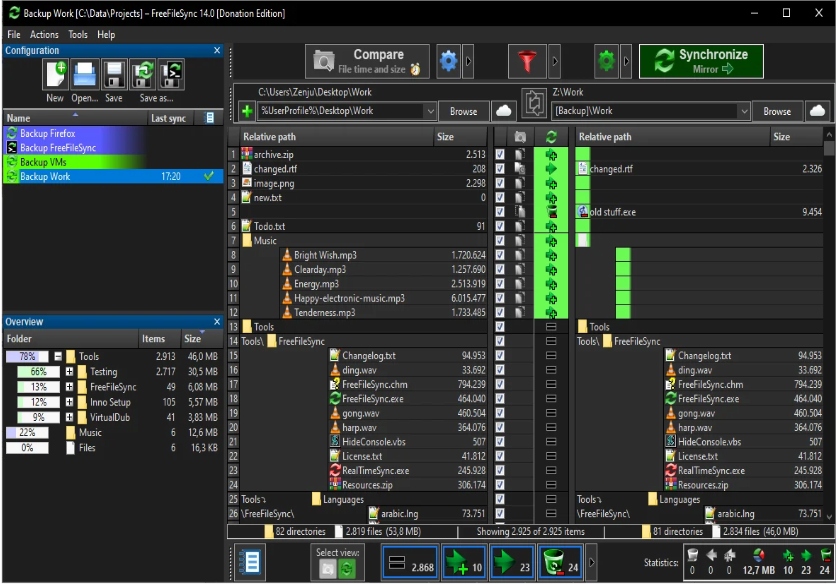
FreeFileSync is an open-source file synchronization application that compares files and folders and helps users keep two locations synchronized. Rather than copying everything manually, users can review differences between locations and choose how those differences should be handled.
For example, you might have documents stored on your computer and want to keep an updated copy on an external hard drive. FreeFileSync can compare the two locations and identify files that need to be copied, updated, or handled according to the selected synchronization rules.
The software is designed for a variety of everyday and professional uses, including:
Synchronizing documents between local folders.
Maintaining copies of photos and videos on external storage.
Comparing project directories before transferring updates.
Keeping selected files consistent across storage locations.
Creating repeatable synchronization jobs for regular maintenance.
FreeFileSync is available for supported versions of Windows, macOS, and Linux. Exact compatibility and available features depend on the current release and operating system.
It is important to understand that synchronization is not automatically the same as a complete backup strategy. If a file is accidentally deleted or overwritten and that change is synchronized, the other location may also be affected. For valuable data, keep an independent backup that is not automatically changed by the same synchronization operation.
Key Features of FreeFileSync
1. Folder Comparison
One of the most useful features of FreeFileSync is its ability to compare two folder locations before making changes.
The application examines the selected folders and identifies differences between their contents. This helps users understand which files are new, modified, or missing from one location.
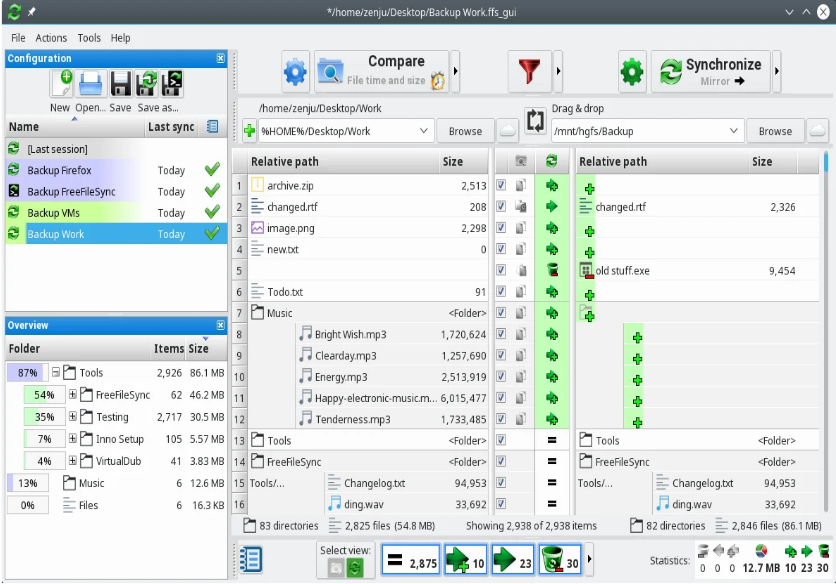
Folder comparison is especially helpful when working with large collections of documents, photographs, videos, or project files. Instead of manually opening folders and checking every item, users can review the comparison results in a single interface.
Before starting a synchronization operation, reviewing the comparison helps you confirm that the proposed changes match your intentions.
2. Multiple Synchronization Modes
FreeFileSync supports different synchronization approaches for different situations.
The available modes include Update, Mirror, and Two-Way synchronization. Each mode handles differences between the selected locations differently.
Update: Copies new or changed files to the destination without making it an exact mirror of the source.
Mirror: Makes the destination match the source, which can include deleting destination files that are not present in the source.
Two-Way: Synchronizes changes between both locations according to the application's comparison and conflict-handling rules.
Choosing the correct mode is essential. Mirror mode, for example, can remove files from the destination. Always inspect the planned actions before running a synchronization job.
3. Batch Synchronization Jobs
FreeFileSync allows users to save synchronization configurations for reuse. This can reduce the effort required to repeat the same task.
For example, a user who regularly synchronizes a Documents folder with an external drive can save the relevant folder paths and synchronization settings rather than configuring everything from scratch each time.
Saved jobs can be useful for routine file maintenance, recurring transfers, and structured personal workflows. Users should periodically review saved configurations to make sure the source, destination, and synchronization mode are still correct.
4. Real-Time Synchronization
FreeFileSync offers a RealTimeSync companion utility for monitoring folders and initiating configured synchronization tasks when changes are detected.
This functionality can help users automate selected workflows instead of manually starting every operation. However, it should be configured carefully, particularly when files are being changed frequently or when the destination contains important data.
Real-time monitoring does not eliminate the need to check synchronization rules or maintain separate backups.
5. External Drive Support
External storage devices are commonly used for transferring files and keeping additional copies of important information. FreeFileSync can work with supported folder locations on devices such as external hard drives and USB storage.
Users can compare folders on their computers with folders on connected storage devices and synchronize the required changes.
Before starting a job, confirm that the correct drive is connected and that the destination path points to the intended folder. Drive letters and mount points can change, so it is worth checking them before running a saved job.
6. Network Folder Synchronization
For supported network locations, FreeFileSync can help synchronize files between accessible folders on different storage systems.
This may be useful in home offices, small businesses, and other environments where files are stored on shared network drives.
Network permissions, connectivity, and file access restrictions can affect whether a synchronization operation completes successfully. Confirm that you have appropriate access to both locations before running a job.
7. File Filters
File filtering helps users control which items are included in a synchronization operation.
Depending on the configuration, filters can be used to exclude unwanted files or focus on selected parts of a folder structure. This can be useful when a project directory contains temporary files, generated data, or other content that should not be transferred.
Carefully review filter settings because an overly broad filter may cause important files to be skipped.
8. Cross-Platform Availability
FreeFileSync supports Windows, macOS, and Linux, making it useful for users who work across different operating systems.
Cross-platform availability can simplify file management for people who use more than one type of computer. However, filesystem differences, permissions, path formats, and platform-specific behavior may affect individual workflows.
Check the current official documentation for supported operating system versions and any relevant limitations.
What’s New in FreeFileSync?
FreeFileSync continues to receive updates intended to improve file synchronization, compatibility, and reliability. The exact changes depend on the release installed, so users should consult the official changelog for confirmed details.
When evaluating a newer version, consider the following areas:
Compatibility improvements: Updates may improve support for newer operating systems and storage environments.
Synchronization reliability: Release changes may address issues involving file comparison, copying, or synchronization behavior.
Performance enhancements: Some releases may improve efficiency when processing large folder collections.
Bug fixes: Maintenance releases may resolve problems reported by users.
Usability improvements: Changes may refine settings, dialogs, and other parts of the application.
For accurate version information, visit the official FreeFileSync website rather than relying on unverified claims about specific features or release dates.
Benefits of Using FreeFileSync
FreeFileSync offers several advantages for users who regularly manage files across different storage locations.
Saves Time on Repetitive Tasks
Manually copying files can be inefficient, particularly when folders contain thousands of items. FreeFileSync helps users identify differences so that they can focus on the changes that need attention.
Helps Keep Files Organized
Comparing folders makes it easier to understand where files have been added, modified, or removed. This is useful for maintaining consistent collections of work documents, photographs, and other digital content.
Supports Flexible Workflows
Different synchronization modes allow users to choose an approach suited to their needs. A simple update operation, an exact mirror, and a two-way synchronization workflow serve different purposes.
Reduces Manual Copying Errors
A structured synchronization process can reduce the chance of overlooking individual files during manual transfers. Reviewing the planned operations before execution adds another layer of control.
Useful for Personal and Professional Projects
Students, photographers, freelancers, developers, and office workers may all benefit from comparing and synchronizing selected folders.
However, FreeFileSync should be used as part of a broader data protection strategy when files are important. Synchronization can propagate unwanted changes, so maintaining separate backups remains essential.
FreeFileSync System Requirements
FreeFileSync is available for multiple desktop operating systems. Requirements depend on the version and platform, so check the official download page before installing it.
Requirement | What to check |
|---|---|
Operating system | Supported Windows, macOS, or Linux release |
Processor | Compatibility with your computer's architecture |
Memory | Sufficient RAM for the size of your folder collections |
Storage | Space for the application and files being copied |
Permissions | Read and write access to the selected locations |
Connectivity | Access to network folders, if required |
For large collections containing many files, available memory, storage speed, and the performance of the source and destination devices can affect synchronization time.
How to Download FreeFileSync for Free
FreeFileSync is an open-source application distributed through its official website. Users should review the current licensing and distribution terms when choosing a download.
Follow these steps to obtain the software safely.
Open the official FreeFileSync website.
Navigate to the download section.
Choose the package that matches your operating system.
Review the available download options and licensing information.
Download the installer or package from the official source.
Check the downloaded file before opening it.
Follow the installation instructions for your operating system.
Official website: FreeFileSync official website
Avoid unofficial packages that claim to provide modified or activated versions. Downloading from the developer's website helps you obtain the intended software and reduces the risk of unwanted bundled applications.
How to Install FreeFileSync
The installation process varies slightly depending on the operating system.
Step 1: Download the Correct Package
Select the version designed for your operating system. Confirm that the package is compatible with your computer before continuing.
Step 2: Open the Downloaded File
On Windows, open the downloaded installer. On macOS or Linux, follow the instructions supplied for the relevant package.
Step 3: Follow the Setup Instructions
Review the available installation options and complete the setup according to the instructions shown on your device.
Step 4: Launch FreeFileSync
Open the application from your Start menu, Applications folder, desktop shortcut, or the appropriate location for your Linux environment.
Step 5: Review the Interface
Familiarize yourself with the source and destination folder fields, comparison controls, synchronization settings, and operation preview.
Step 6: Perform a Test Synchronization
Before using the application on important data, test it with two folders containing sample files. This allows you to understand how the selected synchronization mode behaves without risking valuable information.
How to Use FreeFileSync
Once installed, FreeFileSync can be used to compare folders and synchronize their contents.
Step 1: Select the Source and Destination
Open FreeFileSync and select the two folder locations you want to compare. These may be folders on the same computer, an external drive, or an accessible network location.
Double-check the paths to make sure you have selected the correct locations.
Step 2: Compare the Folders
Start the comparison process. FreeFileSync examines the selected locations and displays differences according to the chosen comparison settings.
Step 3: Review the Results
Examine the proposed operations before making changes. Pay attention to new files, modified files, missing items, and any planned deletions.
If the results are unexpected, stop and investigate the folder paths or settings.
Step 4: Choose a Synchronization Mode
Select Update, Mirror, or Two-Way synchronization according to your requirements.
If you only want to copy selected changes in one direction, Update may be appropriate. If you want the destination to match the source exactly, Mirror may be suitable, but it can delete destination-only files. Two-Way synchronization is intended for workflows in which changes can occur on both sides.
Step 5: Run the Synchronization
After checking the proposed operations and confirming that they are appropriate, start the synchronization process.
Avoid disconnecting an external drive or interrupting the process while files are being transferred.
Step 6: Verify the Results
When the operation finishes, review its status and check the destination folder. For important files, open a few transferred items to confirm that they are accessible and correct.
Understanding FreeFileSync Synchronization Modes
Choosing the right synchronization mode is one of the most important parts of using FreeFileSync safely.

Update mode
Copies new or changed files from the source to the destination without making the destination an exact copy of the source. This can be useful for maintaining an additional copy of selected files.

Mirror mode
Makes the destination match the source. Depending on the differences, this may include deleting files that exist only in the destination. Review the proposed changes carefully before proceeding.

Two-Way mode
Synchronizes changes between both locations according to the application's rules. It is useful when files can be modified on either side, but conflicts and unintended changes still need careful handling.
Important safety tip: Synchronization modes do not all behave the same way. Always review planned deletions and overwrites, particularly when working with your only copy of important data.
FreeFileSync for Backup and Data Protection
FreeFileSync can help maintain additional copies of files, but it is important to distinguish synchronization from a full backup system.
A synchronized destination may be affected when files are deleted or overwritten in the source. This means synchronization alone may not protect against accidental changes, ransomware, hardware failure, or corrupted files.
For better data protection:
Keep an independent backup on a separate storage device or backup destination.
Maintain historical versions of important files when possible.
Disconnect backup drives when they are not needed, where practical.
Test backup restoration periodically.
Review synchronization logs and investigate errors.
Avoid using Mirror mode without understanding its deletion behavior.
For personal documents, family photographs, business records, and other irreplaceable data, a combination of synchronization and independent backups is generally safer than relying on a single synchronized copy.
Pros and Cons of FreeFileSync
Pros
Open-source file synchronization software.
Supports Windows, macOS, and Linux.
Compares folders before applying changes.
Offers multiple synchronization modes.
Supports saved configurations for repeated tasks.
Includes a companion utility for real-time monitoring.
Useful for external storage and supported network locations.
Cons
Beginners may need time to understand its synchronization settings.
Mirror mode can delete destination-only files.
Incorrect configurations can overwrite valuable information.
Synchronization is not a substitute for independent, versioned backups.
Performance depends on storage devices, folder size, and system resources.
Some advanced workflows require careful configuration.
FreeFileSync Alternatives
If FreeFileSync does not meet your requirements, several other tools are worth considering.
1. Syncthing
Syncthing is an open-source file synchronization tool designed to synchronize files between devices. It may be a good option for users who want ongoing synchronization across multiple computers.
2. Microsoft Robocopy
Robocopy is a command-line file-copying utility included with Windows. It is useful for scripted file transfers and advanced copying workflows, although it requires more familiarity with command-line options.
3. rsync
rsync is a widely used file synchronization and transfer utility, particularly on Unix-like systems. It offers powerful options for copying files efficiently but may be less approachable for users who prefer a graphical interface.
4. GoodSync
GoodSync is a file synchronization and backup product with options for different personal and professional workflows. Review its current pricing, supported platforms, and feature availability before choosing it.
Which Alternative Is Best?
The right tool depends on your workflow. FreeFileSync is a useful choice for people who prefer a graphical interface for comparing and synchronizing folders. Syncthing is worth exploring for device-to-device synchronization, while Robocopy and rsync may appeal to users who prefer scripts and command-line control.
Frequently Asked Questions
Is FreeFileSync free to download?
FreeFileSync is an open-source application available from its official website. Review the current licensing and distribution terms to understand the conditions applicable to your use.
Is FreeFileSync available for Windows 11?
FreeFileSync provides Windows versions, but you should check the official download page for the supported Windows releases and any current compatibility requirements.
Does FreeFileSync support macOS and Linux?
Yes, FreeFileSync is available for supported macOS and Linux environments. The specific package and installation steps depend on your operating system.
What is the difference between synchronization and backup?
Synchronization keeps selected locations consistent according to defined rules. A backup is intended to preserve recoverable copies of data, ideally with protection against accidental deletions, overwrites, and other unwanted changes. A synchronized folder alone may not provide that protection.
Can FreeFileSync synchronize an external hard drive?
Yes, it can synchronize accessible folders on supported external storage devices. Confirm the correct destination path and review the proposed changes before starting the operation.
What is the difference between Mirror and Two-Way mode?
Mirror mode makes the destination match the source and can remove files found only at the destination. Two-Way mode synchronizes changes between both locations. The choice depends on whether you want one authoritative source or changes from both sides to be considered.
Can FreeFileSync synchronize files automatically?
FreeFileSync supports saved batch jobs, and its RealTimeSync companion utility can monitor folders and trigger configured tasks when changes are detected. Automation should be configured carefully and tested before being used with important data.
Is FreeFileSync safe to download?
Downloading it from the official website is the recommended approach. As with any software, verify the source, follow installation instructions, and keep your operating system and security software up to date.
Conclusion
FreeFileSync is a practical file and folder synchronization utility for users who want more control over copying and maintaining files across different storage locations. Its folder comparison tools, synchronization modes, saved configurations, and cross-platform availability make it useful for personal file management and recurring data-transfer tasks.
If you are considering FreeFileSync free download, start with the official website and select the version appropriate for your operating system. Learn how the synchronization modes work before using the software on important files, and always review proposed deletions and overwrites.
For the best results, combine FreeFileSync with an independent backup strategy. This approach lets you benefit from convenient synchronization while maintaining additional protection for your valuable documents, photographs, and projects.